Choosing the right wetsuit depends on a combination of water temperature, activity type, session length, and personal comfort. While all wetsuits are designed to provide insulation and protection in the water, different styles and thicknesses offer varying levels of warmth, flexibility, and coverage.
This guide explains the main types of women’s wetsuits, how thickness affects warmth, and how to choose the most suitable option for mild through to very cold water conditions.
Explore our full range of women’s wetsuits designed for different water conditions and activities.
What Does a Wetsuit Do?
A wetsuit works by trapping a thin layer of water between the suit and the body, which is gradually warmed by body heat. This layer of warm water helps create insulation, maintaining comfort in cooler or windy conditions.
In addition to warmth, wetsuits also provide:
-
Protection from wind and sun exposure
-
Added comfort during longer sessions
-
Support and coverage for active water use
Different wetsuit designs prioritise warmth, flexibility, or minimal coverage depending on how and where they’re used.
Understanding Wetsuit Thickness
Wetsuit thickness refers to the thickness of the neoprene material, usually measured in millimetres (mm). Thicker wetsuits provide more insulation, while thinner options prioritise flexibility and freedom of movement.
-
Lighter thicknesses (around 2/2mm) are commonly chosen for mild to warm water conditions, travel, and shorter sessions. They offer light insulation and sun protection while remaining easy to move in.
-
Mid-range thicknesses (3/3mm) provide balanced warmth and are often used for cooler water and changing seasons.
-
Thicker wetsuits (4/3mm and 5/4mm) are designed for cold to very cold water conditions, longer sessions, and winter surf, where increased insulation and heat retention are essential.
Factors such as wind, session length, and individual sensitivity to cold can all influence how warm a wetsuit feels, making thickness selection a personal choice rather than a fixed rule.
What Do Thickness Numbers Like 3/2mm or 4/3mm Mean?
When a wetsuit is described as 3/2mm, 3/3mm, 4/3mm, or 5/4mm, the numbers refer to the thickness of the neoprene panels used in different areas of the suit.
The first number typically indicates the thickness through the torso, where warmth is most important, while the second number refers to the thickness in the arms and legs, where flexibility and ease of movement are prioritised.
For example:
-
A 2/2mm wetsuit offers light, even insulation for mild conditions
-
A 3/3mm wetsuit provides balanced warmth throughout the body
-
A 4/3mm wetsuit increases insulation through the core for colder water
-
A 5/4mm wetsuit delivers maximum warmth for very cold conditions and extended sessions
This panel distribution helps balance warmth and flexibility, allowing wetsuits to adapt to different water temperatures and activity levels.
Water Temperature Guide
Above 75°F / 24°C → 2/2mm springsuit or surfsuit
68–75°F / 20–24°C → 2/2mm fullsuit or long-sleeve surfsuit
60–68°F / 16–20°C → 3/3mm fullsuit
50–60°F / 10–16°C → 4/3mm fullsuit — Below 10°C / 50°F → 5/4mm fullsuit
Types of Women’s Wetsuits
Women’s wetsuits come in a range of styles designed for different conditions and activities. Understanding these options can help narrow down the right choice.
Fullsuit Wetsuits
Fullsuits feature long sleeves and full-length legs, offering the most coverage and insulation. They are commonly chosen for cooler conditions, longer sessions, and winter surf.
Fullsuits allow surfers and swimmers to select the appropriate level of warmth for mild through to very cold water conditions.
The Clark fullsuit is available in 2/2mm through to 5/4mm, each built with Yamamoto limestone neoprene and GBS sealed seams for a second-skin feel across all conditions.

Explore our full range of full wetsuits for women.
Springsuits
Springsuits are lighter wetsuits designed for warm-water conditions. They typically offer shorter leg coverage or lighter insulation while maintaining flexibility. Springsuits are often used for summer surfing, travel, and active water sports.

Browse our collection of women’s springsuits for warm-water sessions.
Long Jane & Short Jane Wetsuits
Long Jane wetsuits provide insulation through the torso and legs while leaving the arms free, allowing greater upper-body movement. Short Jane styles offer similar construction with shorter legs, making them suitable for warmer conditions.
Discover our Long Jane wetsuits designed for flexibility and comfort.
Surf Vests & Neoprene Tops
Neoprene vests and tops provide light insulation and core warmth without restricting arm movement. These pieces are often used on their own in warm water or layered with other neoprene items depending on conditions.
Explore our range of neoprene vests for lightweight insulation.
One-Piece Neoprene Swimsuits
One-piece neoprene swimsuits combine the streamlined feel of swimwear with light insulation and support. They are typically chosen for warm-water conditions where minimal coverage and ease of movement are preferred.
View our neoprene one-piece swimsuits designed for warm-water activities.
Neoprene Bikinis & Shorts
Neoprene bikini sets and shorts offer light insulation and added support compared to standard swimwear. These styles are often used for warm-water surfing and active days in the ocean where flexibility and minimal coverage are key.
Browse neoprene bikinis for active warm-water sessions.
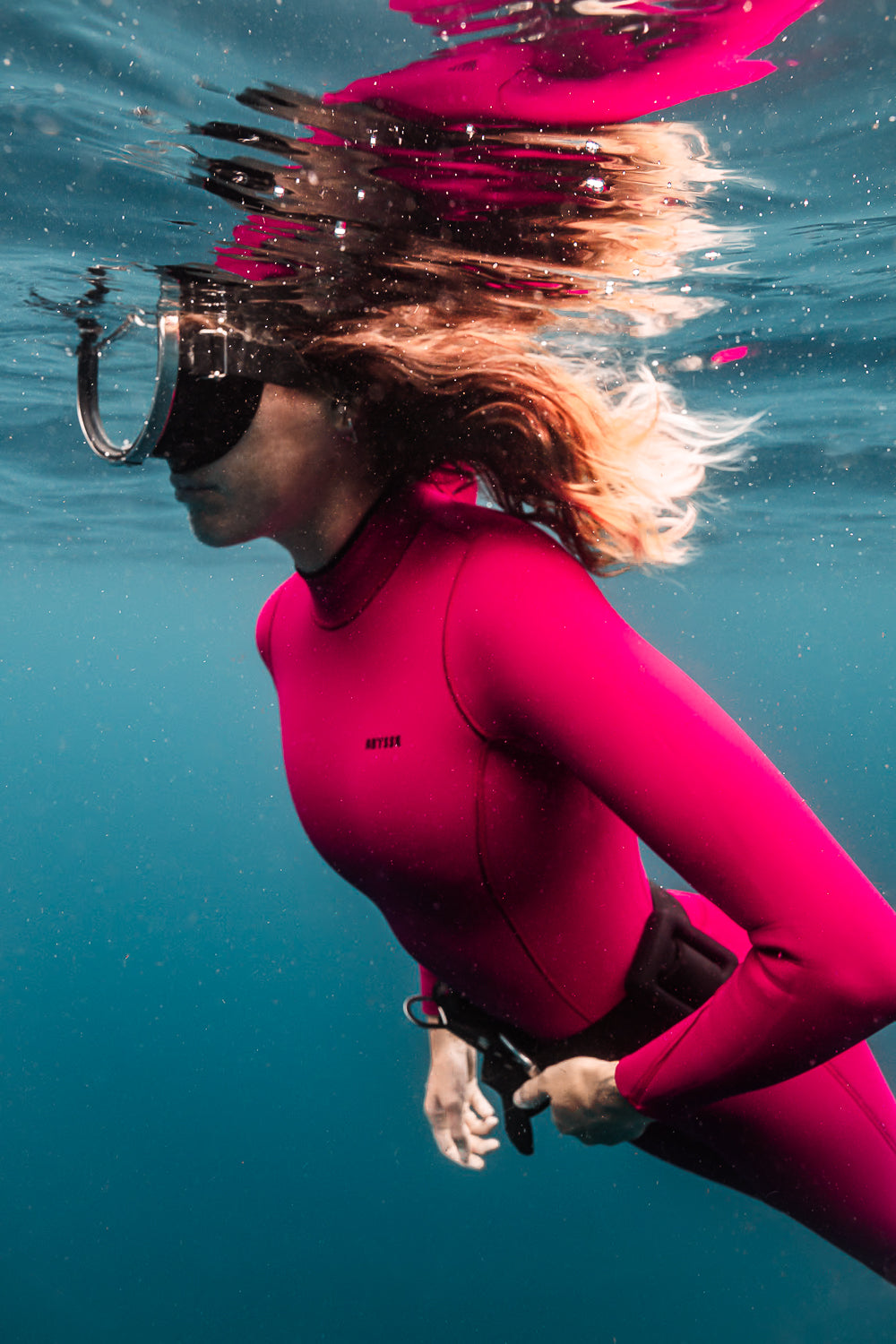
In recent years, women’s wetsuits have evolved beyond purely technical black designs, with more attention given to fit, colour, and aesthetic expression — reflecting a broader shift toward wetsuits that feel as considered as the women who wear them.
Choosing Based on Water Conditions
When selecting a wetsuit, it’s helpful to consider overall conditions rather than temperature alone. Wind, exposure time, and activity intensity all influence how warm a wetsuit feels.
Many surfers and swimmers opt for lighter wetsuits or neoprene pieces in mild conditions, while choosing thicker fullsuits for colder water or longer sessions. Layering neoprene items can also provide flexibility across changing environments.
Fit, Comfort, and Personal Preference
Fit plays a critical role in wetsuit performance. A well-fitting wetsuit should feel snug without restricting movement or breathing. Comfort preferences vary, and individual sensitivity to cold can influence thickness choice.
Activity matters too — surfers who paddle frequently may prioritise shoulder flexibility, while swimmers and divers may prefer streamlined designs with consistent insulation.
Materials & Construction
Modern wetsuits use advanced materials and construction techniques to balance warmth, flexibility, and durability.
-
Limestone-based neoprene is commonly used for its stretch and performance characteristics
-
Flatlock stitching offers comfort and flexibility, often used in lighter wetsuits
-
Glued and blind-stitched (GBS) seams create a more watertight construction, supporting warmth in colder conditions
Understanding these elements can help when comparing wetsuit styles and choosing what best suits your needs.
Why Yamamoto Limestone Neoprene Abysse wetsuits are made using Yamamoto limestone neoprene, produced in Japan from calcium carbonate rather than petroleum. Yamamoto neoprene has a higher closed-cell structure than conventional neoprene, meaning it absorbs less water, retains warmth more effectively, and feels softer and more flexible against the skin. The result is a suit that stays lighter and warmer for longer — without the stiffness of traditional neoprene.
Finding the Right Wetsuit for You
There’s no single “right” wetsuit for everyone. The best choice depends on where you surf or swim, how long you spend in the water, and what feels comfortable for your body and activity.
Starting with an understanding of thickness, style, and fit makes choosing a wetsuit simpler — and ensures you’re comfortable and confident in the water, whatever the conditions.
Explore our complete women’s wetsuit collection to find the right fit for your next session.
FAQ
Q: What temperature is a 4/3mm wetsuit for? A 4/3mm wetsuit is designed for water temperatures between 50–60°F (10–16°C). It provides increased insulation through the core while maintaining flexibility in the limbs for paddling and movement.
Q: Is a 3/3mm wetsuit warm enough for winter? A 3/3mm wetsuit is suited for mid-season conditions, typically water temperatures between 60–68°F (16–20°C). For colder winter conditions below 60°F (16°C), a 4/3mm or 5/4mm fullsuit provides greater insulation.
Q: What is Yamamoto neoprene? Yamamoto neoprene is a limestone-derived neoprene produced in Japan. It is lighter, softer, and more flexible than petroleum-based neoprene, with a higher closed-cell structure that reduces water absorption and improves heat retention.
Q: How should a women's wetsuit fit? A wetsuit should feel like a second skin — snug with no gaps at the neck, wrists, or ankles, but not so tight it restricts breathing or movement. When trying on a wetsuit, raise your arms overhead and squat — you should feel resistance but not restriction.
Q: What is the difference between a wetsuit and a surfsuit? A wetsuit is made from neoprene and designed to retain warmth in cooler water. A surfsuit is made from lightweight UPF 50+ stretch fabric and designed for warm-water surfing and sun protection. Abysse offers both, with surfsuits including the Ama, Bo, Dover, and Joyce styles.