
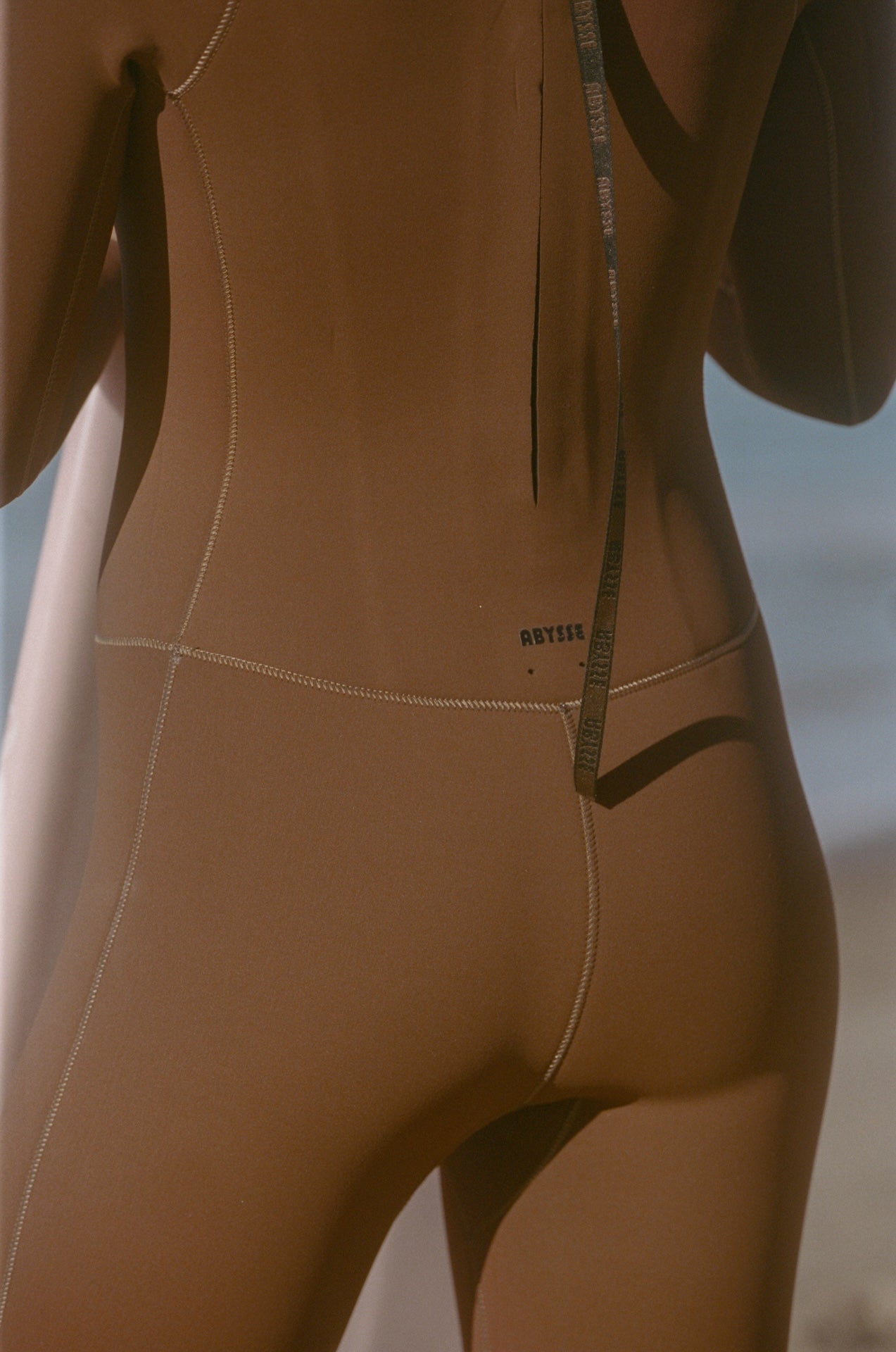
If you've ever wondered why some wetsuits feel like a second skin and others feel stiff and heavy the moment you pull them on. The answer usually starts with the material.
Most wetsuits on the market are still made from petroleum-based neoprene. A growing number of premium wetsuits, including the Abysse range, are made from Yamamoto limestone neoprene or plant-based natural rubber alternatives. The difference shows up in how the suit feels, how it performs, and how it's made.
This guide focuses on the core comparison most surfers are researching: limestone neoprene versus petroleum neoprene, and why the material in your wetsuit matters more than most people realise.
At a glance: Yamamoto limestone neoprene is warmer at the same thickness, absorbs around 2% water versus 30% for petroleum neoprene, offers greater flexibility with over 480% elongation, and produces approximately 30% lower CO₂ emissions in manufacturing.
What is Neoprene?
Neoprene is a synthetic rubber used in wetsuits for its ability to trap warmth, resist water, and stretch with the body. It was first developed in the 1930s and has been the core material in wetsuit manufacturing ever since.
Traditional neoprene is made from petroleum: crude oil is refined into a chemical called chloroprene, which is then polymerised and foamed into the flexible sheets used to build a wetsuit. It works, it's durable, and for decades it was the only option available.
The problem is that petroleum is a finite resource. Extracting and processing it is energy-intensive, and the resulting material, while functional, has limitations in terms of softness, stretch, and water absorption that affect performance in the water.
What is Yamamoto Limestone Neoprene?
Yamamoto is a Japanese manufacturer that pioneered a different approach: producing neoprene from calcium carbonate derived from limestone rather than petroleum.
The process starts with limestone mined in Japan from Mount Kurohime, which contains some of the purest calcium carbonate deposits available: 99.7% pure, compared to the lower-grade limestone used for cement. The calcium carbonate is converted into chloroprene rubber chips, which are then melted, infused with nitrogen gas bubbles, and baked into neoprene foam. The basic structure is the same as petroleum neoprene, but with a fundamentally different cell structure.
Yamamoto limestone neoprene has a higher closed-cell structure than conventional petroleum neoprene, approximately 23% higher. In practical terms, this means:
-
More air bubbles packed more tightly within the material
-
Less water absorbed into the foam (98% water-impermeable vs approximately 70% for petroleum neoprene)
-
Greater flexibility and stretch (maximum elongation over 480%)
-
Lighter weight at the same thickness
-
Better heat retention
Yamamoto produces several grades of limestone neoprene used across the surf and dive industry. Abysse uses Yamamoto neoprene across its women's and kids' wetsuit ranges, and select men's styles, for its performance characteristics and lower environmental footprint compared to petroleum-derived alternatives.
Limestone vs Petroleum Neoprene: The Key Differences
Warmth
Yamamoto limestone neoprene is warmer than petroleum neoprene at the same thickness. The higher closed-cell structure means more nitrogen gas is trapped within the material. Trapped gas is what creates insulation.
A 3mm limestone neoprene wetsuit retains warmth more effectively than a 3mm petroleum neoprene wetsuit. In real-world terms, this means you can wear a thinner suit and stay warmer, or wear the same thickness and extend your time in the water.
Flexibility and Stretch
Limestone neoprene is significantly more flexible than petroleum neoprene. The lower density of the foam, a result of more air bubbles, allows the material to stretch further and return to shape more consistently.
For surfing, this matters. Paddle flexibility, duck dive ease, and the freedom to move through a full range of motion are all influenced by how much resistance your suit creates. A stiff wetsuit is a fatiguing wetsuit. Limestone neoprene reduces that resistance without sacrificing insulation.
Weight and Water Absorption
Petroleum neoprene absorbs considerably more water than limestone neoprene: approximately 30% of its weight versus around 2% for Yamamoto limestone neoprene. As a wetsuit absorbs water during a session, it becomes heavier, which adds drag and reduces the insulating efficiency of the suit.
Limestone neoprene's tighter cell structure absorbs less water. The suit stays lighter throughout a session and dries faster between uses. Over a full day in the water, this difference in weight and comfort becomes very noticeable.
Durability
A well-made limestone neoprene wetsuit typically lasts longer than a comparable petroleum neoprene suit. The material retains its flexibility and structure over time, meaning the suit continues to perform as intended rather than becoming progressively stiffer or less effective with use.
When you factor in longevity, the higher upfront cost of a premium limestone neoprene wetsuit often works out to less per year of use than replacing a cheaper petroleum neoprene suit more frequently.
Environmental Impact
Petroleum neoprene starts with crude oil, a non-renewable resource whose extraction, transport, and processing carries a significant carbon footprint.
Limestone neoprene production requires less energy and produces lower emissions, estimated approximately 30% lower than petroleum. Yamamoto has also invested in responsible energy sourcing for its manufacturing process.
It's worth being clear: limestone neoprene is not a fully sustainable material. Limestone mining has its own environmental impact, and the production process still involves chemical manufacturing. But compared to petroleum neoprene, it represents a meaningful step forward, and when combined with a longer product lifespan, the overall environmental footprint per year of use is considerably lower.
Side-by-Side Comparison
|
Petroleum Neoprene |
Yamamoto Limestone Neoprene |
|
|---|---|---|
|
Raw material |
Crude oil |
Calcium carbonate (limestone) |
|
Cell structure |
Lower closed-cell density |
~23% higher closed-cell density |
|
Warmth |
Standard |
Superior at same thickness |
|
Flexibility |
Moderate |
High, 480%+ elongation |
|
Water absorption |
~30% of weight |
~2% of weight |
|
Weight |
Heavier when wet |
Lighter throughout session |
|
Durability |
Standard |
Extended lifespan |
|
Environmental impact |
High |
Lower |
|
Feel against skin |
Firmer |
Softer, second-skin feel |
How a Wetsuit Is Actually Built: Rubber, Linings, and What Goes Between
Understanding neoprene fully means understanding that a wetsuit panel isn't just rubber. It's a sandwich. The Yamamoto limestone rubber sits in the middle, with a fabric lining laminated to both the inner face (against your skin) and the outer face (exposed to water and elements). These linings affect how the suit feels, how it moves, how quickly it dries, and how durable it is over time.
Most standard wetsuits use virgin nylon or polyester for these linings. One exception is smoothskin neoprene, which leaves the outer face as raw rubber, used on chest panels and lower backs for wind resistance and heat absorption, with no outer lining.
At Abysse, both the inner and outer linings are made from recycled materials. The Yamamoto rubber is sourced directly, sliced to the required thickness, and then laminated with recycled fabric on both sides at the factory. This applies across the women's, men's, and kids' ranges.
Because of this, Abysse refers to its neoprene as Ecoprene: recycled linings combined with Yamamoto limestone rubber. It's not a single material but a construction standard, the combination of responsible rubber and recycled lining that every Abysse wetsuit is built from.
Why Abysse Uses Yamamoto Neoprene
Abysse's material choices aren't marketing decisions. They're performance ones. Across the range, every suit is built with the best available material for its purpose.
Women's wetsuits are all made with Yamamoto limestone neoprene, from the 2/2mm springsuit through to the 5/4mm fullsuit. Combined with GBS sealed seams, thermal lining on core panels, and recycled fabric linings, these suits are built to perform across multiple seasons.
Kids' wetsuits (Minis) are also made with Yamamoto limestone neoprene. The same material performance that makes adult Abysse suits soft, flexible, and warm translates directly into the Minis range, because kids feel the cold too, and a stiff, heavy suit gets in the way of learning and enjoying the water.
Men's wetsuits: Abysse uses Yamamoto limestone neoprene in the Blue Ocean and Reef Brown styles. The men's Black wetsuit is made with Yulex 2.0, a plant-based natural rubber and the lowest-impact wetsuit material currently available. Both materials sit well above petroleum neoprene in performance and environmental responsibility.
Abysse designs for people who spend real time in the water: long sessions, active surfing, movement-first design. A suit that restricts your paddle or stiffens up mid-session works against you. The material for each suit is chosen to make sure that doesn't happen.
Explore women's wetsuits → Explore men's wetsuits → Explore kids' wetsuits →
What About Plant-Based Neoprene?
Plant-based natural rubber, most notably Yulex, represents an important evolution in wetsuit materials. Derived from FSC-certified natural rubber rather than petroleum or limestone, it is a renewable resource with a lower environmental footprint than traditional neoprene alternatives.
Abysse currently uses Yulex 2.0 in the men’s Black 2mm wetsuit. The latest generation of Yulex has significantly improved in flexibility and comfort compared to earlier versions, while remaining one of the lowest-impact wetsuit materials available today.
That said, after extensive testing, we still believe premium Yamamoto limestone neoprene currently delivers superior stretch, lighter weight, and better warmth-to-weight performance, particularly in thicker cold-water wetsuits where flexibility and thermal efficiency become critical. For this reason, Abysse currently chooses to use Yulex in lighter 2mm constructions, where the performance trade-off is minimal, while continuing to rely on Yamamoto limestone neoprene for the majority of the range.
The full comparison between Yamamoto limestone neoprene and Yulex, including performance, environmental impact, durability, warmth, and flexibility, will be explored in a dedicated guide. The short version: both represent meaningful progress beyond petroleum neoprene, and Abysse uses each material where it performs best for the intended conditions and design of the suit.
Frequently Asked Questions
Q: Is Yamamoto neoprene the same as limestone neoprene? Yes. Yamamoto is a Japanese manufacturer that produces limestone-based neoprene. The terms are used interchangeably in the surf and wetsuit industry. Yamamoto is widely regarded as the highest-quality limestone neoprene available, and is used by premium wetsuit brands globally.
Q: Is limestone neoprene eco-friendly? Limestone neoprene has a lower environmental impact than petroleum neoprene, approximately 30% lower CO₂ emissions per kilogram of material. However, it is not fully eco-friendly. Limestone mining has environmental consequences, and the production process still involves chemical manufacturing. It is a better choice than petroleum neoprene, not a zero-impact one.
Q: Does limestone neoprene feel different to wear? Yes. Limestone neoprene is noticeably softer and more flexible than petroleum neoprene. Wetsuits made from Yamamoto limestone neoprene are often described as having a second-skin feel with less resistance, less bulk, more comfort during active use.
Q: Is a limestone neoprene wetsuit worth the higher price? For regular surfers and ocean swimmers, yes. The improved warmth, flexibility, and durability of Yamamoto limestone neoprene means the suit performs better during use and lasts longer over time. When the cost is calculated per year of use, a quality limestone neoprene wetsuit typically offers better value than a cheaper petroleum alternative that needs replacing sooner.
Q: What thickness limestone neoprene wetsuit do I need?
-
2/2mm: warm water, above 68°F / 20°C
-
3/3mm: mid-season, 60–68°F / 16–20°C
-
4/3mm: cold water, 50–60°F / 10–16°C
-
5/4mm: very cold water, below 50°F / 10°C
Because limestone neoprene retains heat more efficiently than petroleum neoprene, you may find you're comfortable in a thinner suit than you'd expect.
Q: Which Abysse wetsuits use Yamamoto neoprene? Abysse uses Yamamoto limestone neoprene across its women's wetsuit range (2/2mm springsuit through to 5/4mm fullsuit), the full Minis kids' wetsuit range, and the men's Blue Ocean and Reef Brown styles. The men's Black wetsuit is made with Yulex 2.0, a plant-based natural rubber and the lowest-impact wetsuit material currently available. All styles feature GBS sealed seams and thermal lining on core panels.
Q: What is Ecoprene? Ecoprene is Abysse's term for its wetsuit construction standard. Every Abysse wetsuit is built from Yamamoto limestone neoprene rubber laminated with recycled fabric linings on both the inner and outer faces. The name reflects the combination of responsible rubber sourcing and recycled materials throughout. Not a single ingredient, but a full construction commitment.
Q: What is the difference between limestone neoprene and plant-based neoprene? Limestone neoprene is made from calcium carbonate derived from limestone rock. Plant-based neoprene such as Yulex is derived from FSC-certified natural rubber trees. Both are significant improvements over petroleum neoprene in environmental impact and performance. Abysse uses both materials across its wetsuit range, and a full dedicated comparison guide is coming soon.
Explore the full Abysse wetsuit range: women's, men's, and kids', built with Yamamoto limestone neoprene and Yulex 2.0 for every season and condition.